|
Ocean Color (OC) is the
water hue due to the presence of tiny plants containing the pigment
chlorophyll, sediments, and colored dissolved organic material (DOM).
Okeanos (Greek god of the
great ‘river ocean’ and the waters surrounding the Earth)
system is a flexible, expandable software system for generating
CoastWatch operational ocean color products.
|
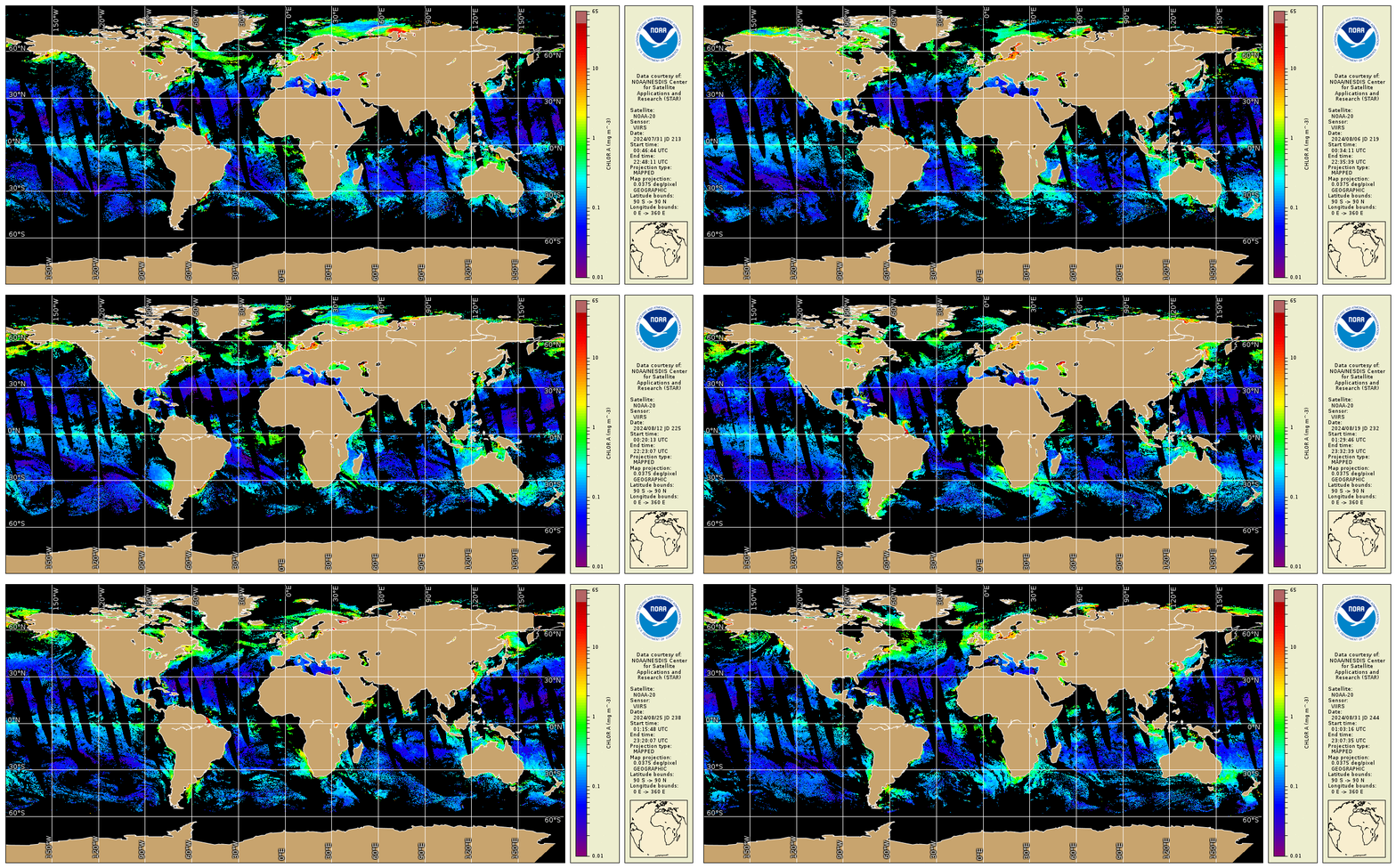
The NOAA Okeanos system has been providing a series of high quality ocean color operational products in near-real time (NRT) mode from a series of satellite observations such as Suomi National Polar-orbiting Partnership (S-NPP) and NOAA20. The ocean color sensor aboard these satellites is the Visible Infrared Imaging Radiometer Suite (VIIRS). The operational products generated from S-NPP, NOAA20 and NOAA21 VIIRS Ocean Color data include chlorophyll-a (Chl-a), chlorophyll-a fronts (Chl-a fronts), remote sensing reflectance (Rrs), water attenuation coefficient (Kd), the diffuse attenuation coefficient for photosynthetically active radiation (KdPAR), and true color. These products are generated in collaboration with the NOAA/NESDIS/STAR Ocean Color Group and NOAA/NESDIS/STAR CoastWatch Group. These products are beneficial in assessing water quality and tracking potentially harmful algal blooms in order to protect public health. For example, the chlorophyll concentration product has been used to understand and predict the harmful algal blooms in the Gulf with Gulf of America by the NOAA Center for Operational Oceanographic Products and Services (CO-OPS).